Have you ever written “better then” and suddenly wondered, “Wait… is that correct?” You are not alone.
Many English learners confuse better than and better then because the two words sound almost the same when people speak quickly.
But their meanings and jobs in a sentence are completely different.
This small mistake can appear in texts, school writing, emails, social media posts, and daily conversations.
The good news is that the difference is actually very easy once you understand what than and then do.
The correct phrase is usually “better than.” We use it when we compare two people, things, ideas, or actions.
For example, “This book is better than that book.” Here, we are comparing two books.
Then is different. It usually talks about time, order, or what happens next. For example, “I finished my homework, then I watched TV.”
After learning this simple difference, you will know exactly when to use better than and why better then is usually a spelling mistake.
You will also learn easy grammar rules, real-life examples, common mistakes, and a quick memory trick that makes the difference much easier to remember.
What Does “Than” Mean?
Than is a word we use when we compare two or more things. It often comes after comparison words such as better, bigger, smaller, faster, older, younger, more, and less.
Think of than as a comparison word.
When Do We Use “Than”?
Use than when you want to show that one thing is different from or higher/lower than another thing.
The basic structure is:
Subject + comparison word + than + person or thing
For example:
My car is faster than your car.
The sentence compares my car and your car.
The word better is the comparative form of good. So, when you compare something with another thing, you normally write:
better than
Grammar Rule for “Than”
Use than after a comparative word when you are making a comparison.
Here are some common comparative words:
- better than
- bigger than
- smaller than
- faster than
- slower than
- older than
- younger than
- more interesting than
- less expensive than
8 Example Sentences with “Than”
- This phone is better than my old phone.
- Ali runs faster than me.
- Today is warmer than yesterday.
- English is easier than I expected.
- My sister is older than me.
- This restaurant is more popular than the one near our house.
- Tea is cheaper than coffee here.
- Your idea is better than mine.
Look at these sentences carefully. In every example, than connects a comparison.
A Common Learner Confusion
Many students write “better then” because than and then sound very similar. When speaking, the difference may not be clear.
For example, a learner may write:
❌ This movie is better then the first one.
The correct sentence is:
✅ This movie is better than the first one.
Why? Because the sentence compares this movie with the first movie.
A simple question can help: “Am I comparing two things?” If the answer is yes, you probably need than.
What Does “Then” Mean?
Then is usually connected to time, order, or the next action. It tells us that something happens after another event or shows what happens next.
Think of then as a word connected to time or sequence.
When Do We Use “Then”?
We use then in several common ways.
First, we can use it to show what happens next.
I ate breakfast, then I went to school.
Second, we can use it to talk about a past or future time.
I was younger then.
Third, then can show a result or condition in some sentences.
If you are ready, then we can leave.
Grammar Rule for “Then”
Use then when you are talking about time, order, or the next step.
It does not normally compare two things.
8 Example Sentences with “Then”
- I finished my work, then I went outside.
- First, wash your hands. Then, eat your food.
- I lived in Lahore then.
- We were very young then.
- If you want to come, then call me.
- She opened the door and then walked inside.
- I will call you then.
- He was busy then, so he could not help us.
Notice that these sentences talk about time or order. They do not compare two things.
Common Learner Confusion
Learners often choose then after better because the words sound similar.
For example:
❌ Your English is better then mine.
This is incorrect because the sentence compares your English and my English.
The correct sentence is:
✅ Your English is better than mine.
Remember, better is a comparison word. That is your first clue.
Difference Between Better Than and Better Then
The main difference is very simple:
Better than = comparison
Better then = usually incorrect when you mean a comparison
Comparison Table
| Phrase | Meaning | Main Use | Example |
|---|---|---|---|
| better than | One thing is better in comparison | Comparing two things | This is better than that. |
| better then | Usually a spelling mistake in this phrase | Not normally used for comparison | ❌ Better then you |
Usage Difference
Better than is the correct phrase when you compare something with another person or thing.
This laptop is better than my old one.
The speaker compares two laptops.
Then has a different job. It talks about time or sequence.
I bought a laptop, then I installed my programs.
Here, then shows the next action.
Grammar Logic
The word better is a comparative adjective. It tells us that one thing has a higher quality than another.
Comparative adjectives often use than.
For example:
- good → better than
- fast → faster than
- tall → taller than
- easy → easier than
This is why we say better than.
Then cannot introduce a comparison.
Sentence Structure Difference
The common structure for better than is:
Subject + better + than + comparison
Example:
This plan is better than the old plan.
The structure with then is often:
Action 1 + then + Action 2
Example:
I finished my homework, then I played a game.
The two words may look similar, but their sentence jobs are different.
Meaning Comparison
Compare these two sentences:
This restaurant is better than that one.
This sentence means one restaurant is better in comparison.
Now look at:
I went to the restaurant, then I came home.
This sentence tells us what happened next.
So, than compares and then shows time or order.
Grammar Rules You Must Remember
Rule #1: Use “Than” After “Better” for Comparisons
When better compares one thing with another, use than.
✅ My new job is better than my old job.
❌ My new job is better then my old job.
Ask yourself: “Am I comparing?” If yes, choose than.
Rule #2: Use “Then” for the Next Action
When you explain what happens next, use then.
✅ I took a shower, then I got dressed.
Here, then means something like after that.
You can often replace then with after that.
I took a shower. After that, I got dressed.
This is a useful test.
Rule #3: Comparative Words Often Need “Than”
Many comparison words work with than.
✅ She is taller than me.
✅ This test is easier than the last one.
✅ He runs faster than his brother.
✅ This option is better than the first option.
The word than helps complete the comparison.
Rule #4: “Then” Does Not Mean “In Comparison With”
Do not use then when you want to compare two things.
❌ My new phone is better then yours.
✅ My new phone is better than yours.
The word yours gives us a second thing to compare. That is a strong sign that than is needed.
Common Mistakes Students Make
Mistake 1: Writing “Better Then”
This is the most common mistake.
❌ This answer is better then yours.
✅ This answer is better than yours.
Why does this happen?
The words than and then have similar sounds. Students often write the word they remember first.
Easy correction tip: Look for a comparison. If you see better + another person or thing, use than.
Mistake 2: Using “Than” for Time
Some learners also make the opposite mistake.
❌ I ate dinner than went to bed.
The correct sentence is:
✅ I ate dinner, then went to bed.
The sentence shows two actions in order. So, we need then.
Mistake 3: Confusing “Better Than” with “Better Then”
Students sometimes think the word then means “the second thing.”
It does not.
Than is the word used for a comparison.
For example:
✅ This shirt is better than that shirt.
Do not think of than as a time word. Think of it as a comparison word.
Mistake 4: Trusting Pronunciation
When people speak quickly, than and then can sound very close.
That is why listening alone may not help you choose the correct spelling.
For writing, think about the meaning and grammar job.
Ask:
Better Than or Better Then
Or:
Better Than or Better Then
That question usually solves the problem.
Easy Trick to Remember the Difference
Here is a very easy memory trick:
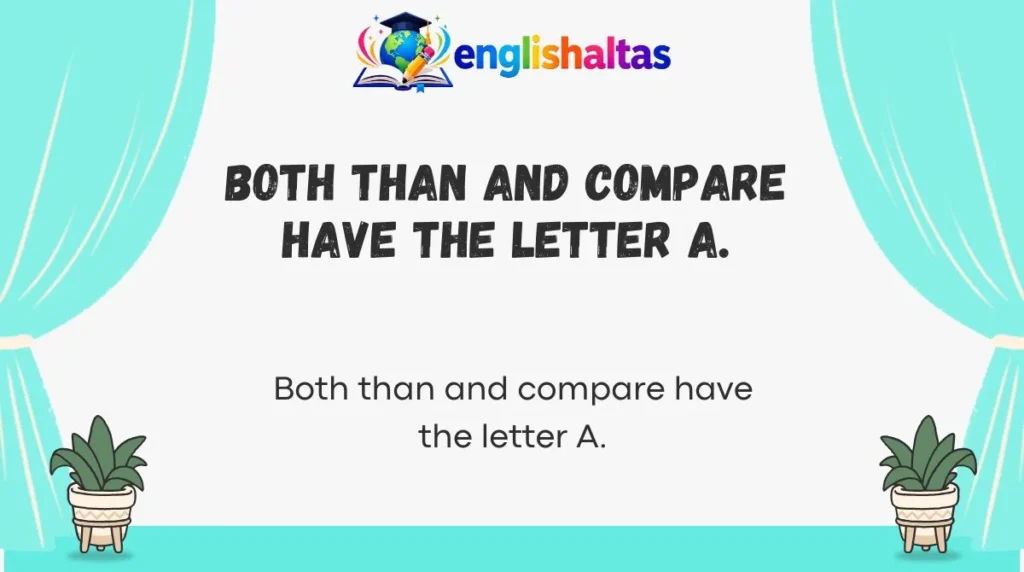
THAN = COMPARISON
Both than and compare have the letter A.
THAN → A → comparison
For example:
Better Than or Better Then
Faster than
Better Than or Better Then
Now remember:
THEN = TIME
Both then and time begin with T.
THEN → T → time
For example:
Better Than or Better Then
I ate, then I slept.
You can also remember this little classroom line:
Better Than or Better Then
Imagine two things standing next to each other. You compare them with than.
Now imagine actions moving one after another. You use then.
For example:
My new phone is better than my old phone.
Two phones are being compared.
I bought the phone, then I charged it.
Two actions happen in order.
This small trick is simple, but it works well for students.
Daily Life Examples
Here are some natural examples you may hear or use in everyday English.
1. Talking About a Phone
A: How is your new phone?
B: It is better than my old one.
The speaker compares two phones.
2. Talking About Food
This pizza is better than the pizza we had yesterday.
The speaker compares two pizzas.
3. Talking About School
Math is better than science for me.
The speaker gives a comparison between two subjects.
4. Talking About Work
This job is better than my previous job.
Again, than shows comparison.
5. Showing the Next Action
I will finish my homework, then I will play games.
The word then shows what happens next.
6. Giving Instructions
First, open the app. Then, tap the settings button.
This is a very common use of then.
7. Comparing English Skills
My English is better than it was last year.
The sentence compares English ability at two different times.
8. Talking About a Decision
Better Than or Better Then
First one action happens. Then the next action happens.
9. Comparing Two Choices
Better Than or Better Then
The word than connects the comparison.
10. Talking About the Past
I was very shy then.
Better Than or Better Then
Practice Section: Choose the Correct Word
Choose than or then in each sentence.
- Better Than or Better Then
- I finished my lunch, ___ I went back to work.
- Better Than or Better Then
- First, read the question. ___ write your answer.
- Better Than or Better Then
Answers
- Better Than or Better Then
- then
- Better Than or Better Then
- Then
- Better Than or Better Then
Quick Explanation
Sentences 1, 3, and 5 compare two things, so we use than.
Sentences 2 and 4 show the order of actions, so we use then.
If you got all five correct, great job! If not, do not worry. Just remember the basic idea: than compares, then shows time or order.
FAQs
What is the difference between “better than” and “better then”?
Better than is the correct phrase for comparing two people or things. Then usually talks about time or the next action. For example, “This is better than that.” Use then in “I ate, then I left.”
Is “better then” grammatically correct?
Better then is usually incorrect when you mean “better in comparison with something.” The correct phrase is better than. For example, write “My new phone is better than my old phone.”
Can we use “than” in questions?
Yes. Than is often used in questions that compare things. For example, “Is this phone better than that one?” The question compares two phones, so than is correct.
Is “then” formal or informal?
Then is used in both formal and informal English. It is a normal English word for talking about time, order, or a result. For example, “First, complete the form. Then, sign it.”
Why do people confuse “than” and “then”?
The two words sound very similar, especially in fast speech. Many English learners also remember the spelling incorrectly. The best solution is to focus on meaning: than compares, while then shows time or order.
Should I write “better than me” or “better then me”?
Write “better than me” when you are making a comparison. For example, “She is better than me at tennis.” The word than is correct because the sentence compares two people.
Conclusion
The difference between better than and better then is small but important. The correct phrase for comparison is better than.
Use it when you compare one person, thing, or idea with another.
Than = comparison.
For example, “This book is better than that book.”
Use then when you talk about time, order, or the next action. For example, “I finished my work, then I went home.”
The easiest way to remember the difference is to ask yourself one question: “Am I comparing something?” If yes, use than. If you are explaining what happens next, use then.
Do not feel bad if you have made this mistake before. Even strong English learners sometimes confuse these two words.
Just practice a few simple sentences, and the difference will soon feel natural. Than compares. Then shows what comes next.

Oliver Bennett is an English language educator and content writer passionate about simplifying grammar. He creates clear, practical lessons, writing tips, and learning resources that help readers improve their English with confidence.